Waynesboro Commercial Dumpster Logistics & Fleet Access

Burke County Roll-Offs provides expert commercial dumpster logistics and fleet access in Waynesboro, GA. Our specialized fleet navigates tight alleys, loading docks, and complex job sites with ease. Serving local businesses with reliable waste management solutions tailored to Waynesboro's unique needs. Trust our experienced team for efficient dumpster placement and pickup. Call (706) 670-2518 for a quote.

operations

Dumpster Logistics in Burke County

Local fleet deployment and material handling protocols for Waynesboro commercial projects.

Burke County Roll-Off Fleet

Local dumpster fleet stationed near Waynesboro Industrial Park for rapid deployment. Trucks maintained per Georgia DOT safety standards.

Waynesboro Zoning Compliance

Pre-approved dumpster placements for commercial zones near Jones Avenue and Liberty Street. Coordinate with city waste management schedules.

EPA Debris Handling

Separate containers for regulated materials like roofing shingles at construction sites near Magnolia Springs Wildlife Area.

On-Site Load Monitoring

Drivers verify weight distribution before leaving job sites near Plant Vogtle to prevent road damage.
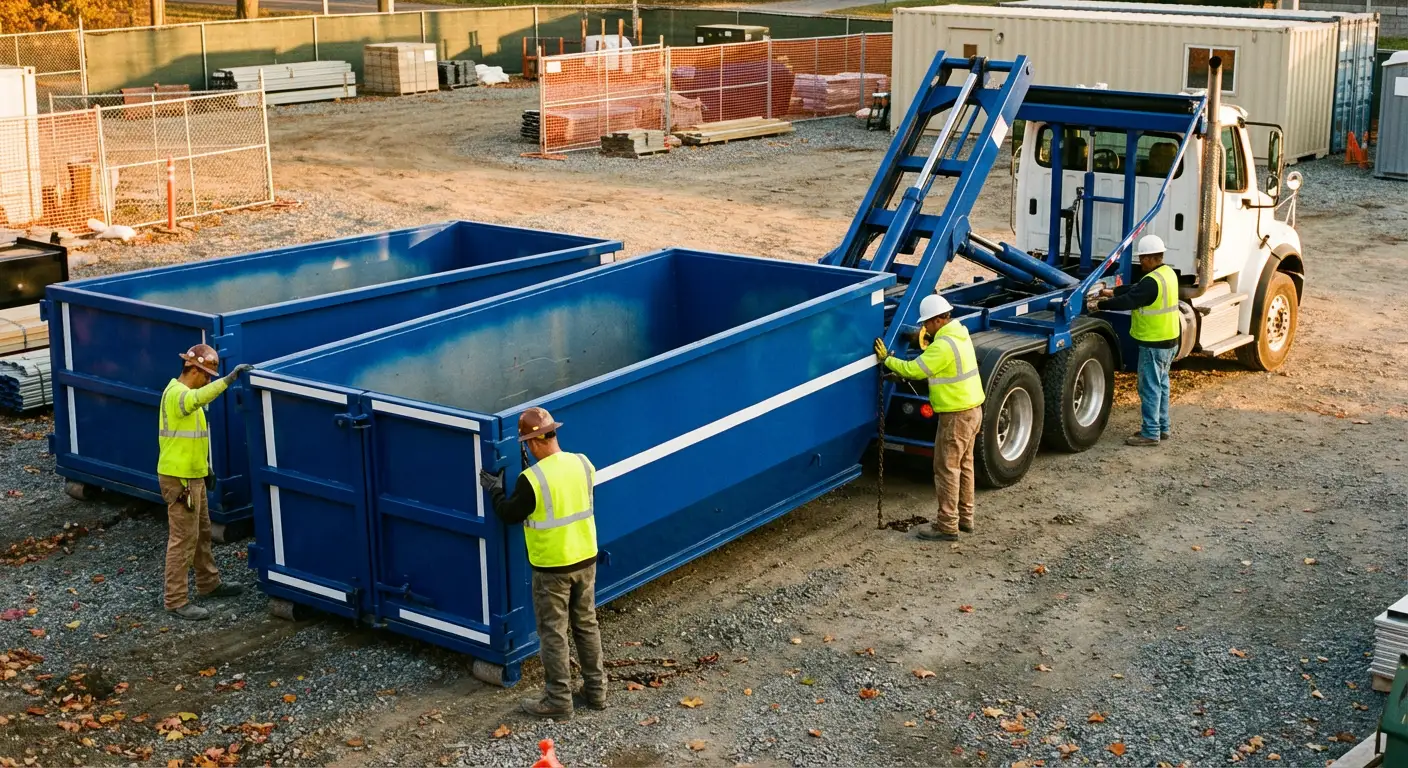
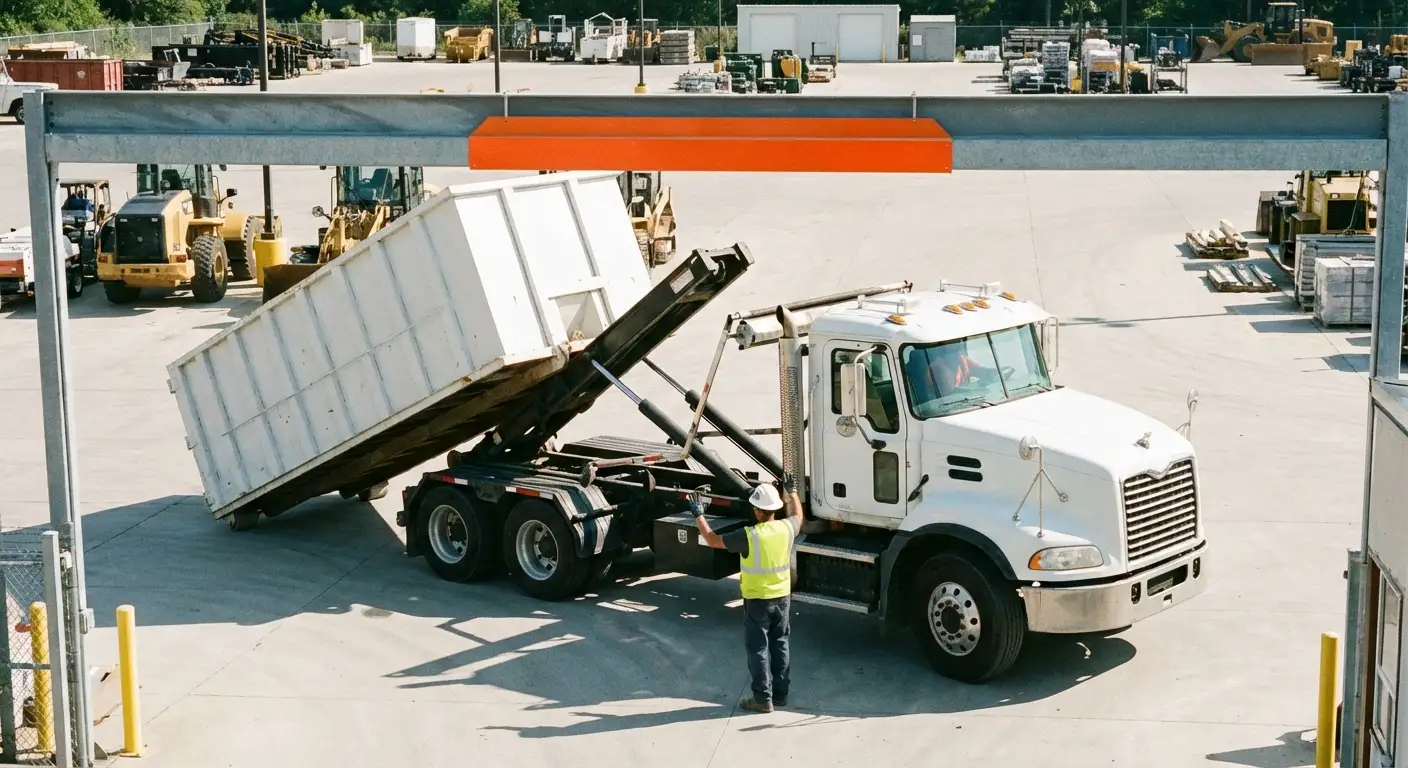
Commercial dumpster delivery truck specifications and clearance requirements in Waynesboro, GA

Commercial Dumpster Logistics & Fleet Access

Optimized dumpster delivery and pick-up services ensure efficient fleet access and compliance in Waynesboro, GA commercial sites.

Fleet Size Multiple roll-off trucks available for efficient commercial dumpster service
Access Requirements Designed to accommodate tight spaces and restricted commercial sites in Waynesboro, GA
Scheduling Flexibility Coordinated pick-up and drop-off times to minimize operational disruptions
Load Capacity Supports dumpsters ranging from 10 to 40 cubic yards for various commercial needs
Compliance Standards Operations adhere to EPA and local environmental regulations
Safety Protocols Follows OSHA guidelines for driver and site safety during logistics operations

Technical Definition

Commercial dumpster logistics in Waynesboro centers on access, staging, and pickup timing around Burke County job sites. Crews check lane width, overhead clearance, and surface strength before setting a container. Tight yards near downtown loading areas often need a compact footprint and a walk-in loading door for safer sorting. Traffic flow matters at each drop, since blocked entrances slow tenants and haulers. For route planning, Burke County Roll-Offs keeps placement aligned with site entry, the truck’s swing radius, and local debris rules. Related guidance at walk-in loading door, compact footprint, high-tonnage capacity, and driveway protection helps crews match equipment to the lot. Weight control, prohibited loads, and local access rules also shape every move near Waynesboro commercial corridors. See avoiding overage fees and prohibited items list for field checks before pickup.

Simple Explanation

This topic covers how commercial dumpsters get placed, loaded, and removed in Waynesboro when trucks need room to enter and exit safely. It focuses on site access, container fit, surface protection, and load control for Burke County Roll-Offs. Crews use these checks to keep deliveries moving through Burke County business lots without blocking doors, breaking pavement, or creating pickup delays.

Related Terminology

Fleet access planning
:
Arranging truck entry, turning room, and exit paths so roll-off units reach Burke County loading points without blocking other commercial traffic in Waynesboro.
Walk-in loading door
:
A side entry feature used for controlled loading at Burke County sites where crews need step-in access for boxed freight and mixed debris.
Compact footprint
:
A container profile that fits tighter drive lanes and alley staging areas near Waynesboro storefronts and service yards with limited maneuver space.
High-tonnage capacity
:
Container strength suited for dense material streams from Burke County construction, pallet cleanup, and mixed commercial waste handled under field load limits.
Driveway protection
:
Placement methods using boards, pads, or route changes to reduce surface damage during container drop-off and pickup around Waynesboro commercial lots.
Overage control
:
Load management that keeps debris levels, weight distribution, and pickup readiness within the limits used on Burke County roll-off routes.

Commercial Dumpster Fleet Access in Waynesboro

Immediate availability for Burke County job sites.

Common Mistakes in Commercial Dumpster Logistics & Fleet Access

Handling commercial dumpster logistics in Waynesboro, GA calls for precise planning. Our crew’s seen firsthand how small errors can snowball into costly delays and damaged equipment. Here’s what trips people up.

Ignoring site access limitations

The Consequence

Dumpsters placed without checking fleet access can block traffic or get stuck, leading to job delays and extra labor costs to reposition equipment.

The Fix

Scout the location for overhead wires, narrow lanes, and turning radii before scheduling delivery to avoid access issues.

Underestimating dumpster size for fleet maneuvering

The Consequence

Ordering too large a dumpster makes it tough for trucks to navigate tight rural or industrial roads, risking damage to property or the dumpster itself.

The Fix

Match dumpster dimensions to site constraints and equipment capabilities, considering our compact footprint options.

Failing to protect driveways and surfaces

The Consequence

Heavy roll-off trucks and dumpsters can tear up driveways or landscaping, leading to repair costs and frustrated property owners.

The Fix

Use driveway protection techniques like plywood mats or cribbing to safeguard surfaces.

Scheduling deliveries without confirming local regulations

The Consequence

Ignoring local permit requirements can result in fines or forced dumpster removal, interrupting project timelines.

The Fix

Check with local authorities and use our permit guide to ensure compliance before delivery.

Not coordinating dumpster placement with fleet timing

The Consequence

Poor timing can cause trucks to wait or double back, wasting fuel and crew hours, especially during tight construction schedules.

The Fix

Communicate clear windows for delivery and pickup to align with fleet availability and on-site activity.

Commercial Dumpster Logistics That Keep Fleet Access Open

I learned commercial dumpster logistics during the early construction rush at Plant Vogtle, where bad access cost more than bad labor ever did. We set containers with the truck path in mind, not just the empty space on a site plan. That means checking turns, ground strength, loading height, and how your fleet still needs to move after the box lands. Around Waynesboro, that kind of planning keeps work moving through mud, heat, and tight commercial yards.

  • 1

    We map the site before the truck ever rolls

    Commercial dumpster work lives or dies on access. We walk the lane, check turning radius, look for low limbs, soft shoulders, overhead lines, and the spots where delivery trucks like to sink after a rain. In Waynesboro, we’ve learned the hard way that a clean route on paper can turn tight once you hit gravel, clay, or a narrow dock apron. That’s why we plan the drop like freight, not like a backyard rental.

    Real World Example

    At Plant Vogtle, we watched outside haulers miss the easiest approach and burn time backing out of a bad angle. We kept the roll-off closer to the loading path and cleared the approach first.

  • 2

    We match the box to the work and the fleet path

    A commercial site doesn’t need a one-size-fits-all bin. Some jobs need a low-profile container under dock height; others need high-tonnage capacity for dense debris like concrete or mixed demolition waste. We look at what’s getting loaded, what the haul route can handle, and how the crew actually throws material in. That keeps the container usable instead of turning it into a bottleneck.

    Real World Example

    When a crew’s moving heavy tear-out material, we’ll set a concrete disposal option or a high-tonnage capacity setup instead of forcing everything into a light-duty plan.

  • 3

    We protect access so the job keeps moving

    Fleet access isn’t just about getting in once. It’s about keeping the yard, driveway, or service lane open for loaders, box trucks, and the next haul-out. We use the right placement, watch ground conditions after rain, and keep an eye on driveway edges and pavement stress. That matters when a commercial property has daily traffic and no room for a stalled container to block a dock or fire lane.

    Real World Example

    We’ve used a compact footprint setup at tight commercial sites, then paired it with driveway protection and the right 20-yard dumpster to keep traffic flowing.

  • 4

    We keep the load honest and the site compliant

    We don’t treat a dumpster like a catch-all. Hazardous items, prohibited debris, and overfilled containers create real delays for commercial crews, and we’ve seen both happen when nobody wanted to slow down and sort. We explain what belongs, what doesn’t, and how to load it so the trailer or roll-off leaves cleanly. That’s how you avoid headaches with the property manager, the landfill, and the crew standing around waiting on a reset.

    Real World Example

    Our crew leans on the prohibited items list, the avoiding overage fees guide, and the safety guide so the load leaves the site the same way it should’ve arrived: under control.

We’ll place every roll-off with access, safety, and site flow in mind, so your crew keeps working and your fleet keeps moving without the box getting in the way.

When Commercial Waste Logistics Get Complicated, We've Got the Local Know-How

 neighborhood map in Waynesboro, GA
Commercial Access Main Street District

Navigating Rural Routes Under Tight Deadlines

When a contractor needed urgent dumpster swaps at Plant Vogtle's expansion, their usual hauler got stuck on narrow backroads. I remember seeing their driver white-knuckling the wheel as gravel sprayed from their overloaded tandem axles. One wrong turn could've meant hours of delays.

We mobilized our local fleet with day/night shifts, using single-axle trucks that handle Burke County's backroads. Our crew pre-ran routes to flag low bridges and soft shoulders. The project stayed on schedule with zero service interruptions.

Your team knew these roads like the back of their hands.

Plant Vogtle Site Superintendent

 neighborhood map in Waynesboro, GA
Time-Critical Setup Victory Park

High-Wind Debris Management During Storm Cleanup

After straight-line winds tore through Waynesboro's industrial park, a packaging plant had roofing materials scattered across three acres. Their standard 30-yarder couldn't handle the volume, and debris was blocking fire lanes.

We positioned two 40-yard compactors with extended gates for loader access, then scheduled overlapping pickups to prevent overflow. Our spotter directed traffic around the chaos while we worked. The lot was cleared before the next storm system hit.

They turned a week's job into two days flat.

Industrial Park Facility Manager

Commercial Dumpster Logistics & Fleet Access in Waynesboro, GA

Key logistics and fleet access considerations for commercial dumpsters in Waynesboro's varied business zones.

What are common access challenges for roll-off dumpsters in Waynesboro's industrial areas?
Industrial zones near Burke County Industrial Park often have narrow lanes and overhead power lines limiting large truck access, requiring precise vehicle positioning.
How does Burke County Roll-Offs manage dumpster placement in tight retail district spaces?
In Waynesboro’s downtown retail corridors, dumpsters are placed on designated loading zones or side streets to avoid blocking customer parking and comply with city ordinances.
Are there specific local regulations impacting commercial dumpster logistics in Waynesboro?
Waynesboro follows Georgia EPD and local DEQ guidelines mandating waste containment and spill prevention, especially near the Broad River watershed.
What fleet access restrictions apply to commercial dumpsters around Waynesboro schools?
Schools such as Burke County High School restrict roll-off deliveries during peak drop-off and pick-up times to ensure student safety and avoid traffic congestion.
How does weather affect dumpster logistics in the Waynesboro area?
Heavy rains common near the Savannah River basin can soften ground, requiring trucks to use mats or delay deliveries to prevent vehicle bogging.
What operational steps are taken when placing dumpsters on private property in Waynesboro?
Burke County Roll-Offs coordinates with property managers for permits and verifies underground utilities near Waynesboro’s commercial parks before deployment.
Commercial dumpster logistics and delivery truck access in Waynesboro, GA

Commercial Dumpster Access for Busy Fleet Sites

Coordinate roll-off placement for loading docks, storage yards, and commercial fleets in Waynesboro, Georgia, with clear access planning and delivery coordination.

Request Fleet Access

Local Burke County service with straightforward scheduling and site-access planning.